
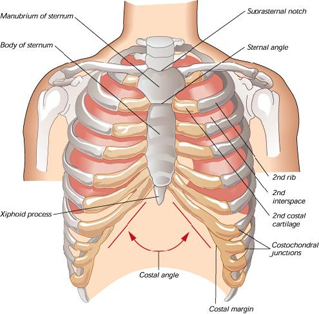
The chest wall is made of multiple small arc shaped bones called ribs with muscles in between which holds them together as well as helps to move during breathing. All the ribs are connected to the spine bones (vertebrae) at the back and some of them are connected with the central chest bone in front called sternum. The chest wall is the protective cage for the most vital organs of the body; the heart and lungs. Other than these the food passage canal (oesophagus) and the wind pipe is also situated within the bony thorax.
As so many structures are related with the chest wall , all of these can be source of pain in the chest. In fact the bony causes for chest pain are quite low down the list of causes of chest pain. The common reasons for which the pain is felt in the chest are from heart e.g. heart attack, angina, causes related to lung conditions include pneumonia, pleurisy or severe spasm in the chest or blood clot in the lung. Acid reflux from stomach into the food pipe oesophagus also causes heartburn. Of the musculoskeletal causes of chest pain the common ones are a broken rib, inflammation of the rib cartilage in the front - costochondritis, trapped or irritated nerves due to multiple rib fractures or muscle ache from attempted lifting of heavy weight or vigorous unaccustomed exercises. Sometimes broken ends of the rib penetrate the underlying lungs causing air leakage and collapse of the lung (pneumothorax) associated with severe pain.
Overall chest pain should be considered with seriousness in all occasions as some of the causes are fatal and leads to life threatening situations if not diagnosed or treated properly.
We limit our discussions to chest pain associated with muscle and bone conditions. In most of these conditions the pain is quite rapid to begin and commonly associated with history of some injury or vigorous activity (like starting gym exercises). The pain is associated with some local soreness and often people complain of difficulty to cough or sneeze. Change of body posture during sleep causes sharp aggravation of pain and the person may wake up suddenly. Severe soreness over the front of chest close to the midline along with local warmth over one or two ribs is suggestive of costochondritis.
Chest pain should be treated at home with caution. For the first two days some breathing exercises and application of ice pack can be tried along with some over the counter pain killers, if no relief it is better to see a doctor.
In order to diagnose the doctor will take detail history about the chest condition including history of cough or fever if any, food and smoking habit, work pattern and injury if any. He will listen to either side of chest with stethoscope to see if there is adequate air entry. The common tests done for chest conditions included chest x-ray, CT scan to look for fine fractures in the ribs, an ECG or echocardiogram of heart. As treatment most of the patients will be given a period of rest along with medicines to reduce pain and anxiety, mild soothing gels or ointments for local applications may be of help. Gentle breathing exercises to be done twice or thrice daily for about 10 minutes each. Chest binders may be of help if chest movements are too painful.
If there is no particular problems in bones or muscles the doctor might refer you to a specialist like cardiologist or gastroenterologist as he might think necessary